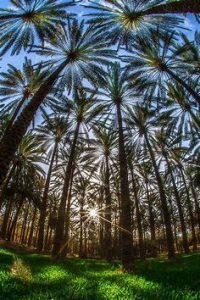
 Yes, planting your new potted palm is almost as easy as planting any other tree…
Well almost, the exception being if you wanted or required to have certain species of the mature replanted palms to be in your garden or in your commercial project for that “instant” topical garden result!
Transplanting:
So, to start with, when transplanting, try to keep the roots moist. And it’s also recommended to acclimatise your tree by placing your new potted tree at your intended planting location. If possible, ideally do so a few weeks before planting it. This will help reduce the tree’s shock from the transplant.
Be sure to water daily for the first week and a half, and apply a mulch to keep moisture in the soil. In most cases, establishing palm trees is no different from planting any other form of tree. Palms purchased at nurseries are typically offered for sale in two containers: a pot or a ball and burlap. And again, ideally and as soon as possible after purchasing your tree, aim to have it into the ground.
Exercise Care and Caution;
If there’s a delay between buying your palm and planting it, care for it by keeping the root ball moist but not soaked. It’s important to exercise caution when moving or managing palm plants. Which means whenever bark is breached; the palm is then potentially left open to attack by pests like insects and fungi. And understand this: the best planting success season is typically maximised during the warmer months of the year.
How Big Do You Dig the Hole for Your Palm?
With a new “young” palm dig the hole for your palm at least as broad as the root ball and deeper than it’s tall. It’s possible that a rule of “twice as wide” could be useful in many situations. When digging the hole, make sure it’s deep enough to plant the tree at the same level it was grown in.
Remembering to backfill the hole with the original soil and/or washed plaster-grade sand while continuously wetting it. If you backfill with sand, the tree might not even need bracing because of how well it drains and how stiff it stays.
Don’t bury the tree’s roots any further than they already are; doing so could starve them of oxygen and water. When you’ve settled the tree into place, remember; only fill in the hole with the earth you just dug up or that was originally around the palm or as advised by your nursery you bought it from.
Facilitating Your Palm’s Rapid Adaptation:
Ideally “amend” the soil with mycorrhizal fungus. Its fungus colonises the palm’s root system, facilitating the palm’s rapid adaptation to its environment by increasing its availability to water and nutrients. It’s best to apply it when you plant the trees, but it’;s still possible to do it later if you forgot to do it.
After the palm’s been planted, create a “mini-dam” by erecting a ring of soil around the outside of the hole. Then, mulch the tree’s base with organic material. Ideally, you’d want to go at least 75mm (or 3-inches) deep.
Strong winds and storms can cause damage to larger trees. Do research to learn more about palm bracing.
Correct Early Watering and Fertilising:
If you just planted some palm trees, you need to water them very often. Beginning at a rate of once every day for the first two weeks, gradually reducing to once every other day over the period of several months as even the tree matures. Make use of a bubbler or set up a hose to slowly saturate the ground surrounding the tree. Make sure the soil doesn’t dry out too much or your new palm may suffer.
In addition, palm trees need to be fertilised on a regular basis. Commercially produced mixtures are available, and they work particularly well for palms. Finally, be careful while mowing grass or removing weeds near palm trees, as any wounds to the bark could encourage pests and illness.
Planting and Growing Palm Trees
You want to turn your backyard into a tropical haven?
Then follow these five easy instructions.
1. Choose palm trees that will thrive in your area’s typical conditions.
2. Don’t let the soil dry out around the root ball as you replant.
3. Use a mixture of new and existing soil to fill in the planting hole.
4. To ensure that your fresh palm tree thrives, set up a soaker line to water it regularly.
5. Plant food should be given to palm palms one month after planting.
Do you want to give your garden a more exotic feel? Make a palm tree your new home. The area might support a wide range of species. Different types of palm trees, tall and short, as well as desert and cold-hardy palms, could all have the possibility of thriving in the various regions around where you’re living. Seek professional advice for the best results and the easy maintenance of your palm.
Selecting the Best Palm for Your Climate:
If winters are moderate where you live, you can choose a palm species based on its size and aesthetics.
Even if you live in an area where the temperature drops in the winter, you can still grow palm trees in your yard. Sago palms, saw palmettos, European fan palms, or Chinese windmill palms all thrive in colder climates and can be grown successfully. Sometimes it’s just a matter of seeking professional advice and doing a bit of “test and measure”.
Choosing a Location for Your Palm:
Your location considerations for palm tree planting are somewhat tree-specific; and you can take your time to grow them, you’ll also find out that some palms will quickly outgrow their current space. This is dependent on theb sunlight, general position, watering, fertilising, sheltering, etc.
Which means it’s a good idea to not only follow the instructions on the tree’s tag, yet also consult the staff at your garden centre to determine how much room the palm will need to grow.
Recounting How to Plant Your Palm Tree:
To add (and somewhat repeat) what was said above, keep the root system, that is the centre mass of the tree’s roots moist but not soaked after purchasing your palm tree. And make sure the hole is broad enough to accommodate the root ball as well as deep enough so that the base of the ball is just a 10-20mm above the soil.
Fill the hole around the root ball with a mixture mix native soil and soil/fertiliser for Palm Cactus & Citrus. This can feed your palm for up to three months, as it contains plant food created especially for palms, cacti, and citrus trees.
New Palm Trees are Thirsty for Water:
Remember to take care to water your palm regularly for the first two to three weeks after planting. You can save water by keeping the roots moist by wrapping a soaking hose all around the area around the palm.
Once the palm is established, you can reduce the length of time you soak-water it to roughly 15 minutes twice per month; remembering to then reduce your irrigation frequency during the winter.
Take Care of Your Palm:
Coconut palms have certain dietary requirements that other trees might not meet. To prevent fronds from turning yellow or curling, they require sufficient amounts of magnesium, iron, and manganese. Apply Miracle-Gro Shake’n Fed regularly to maintain a healthy, green palm.
Feed your palm trees with Continuous Releases Palm Plant Food once every three months, starting early in the season. Dig into the top inch to three inches of soil near the plant's roots and then drench the area. is the difference between an arborist and a tree trimmer?
When is the Best Time to Plant Palm?
Mature palm trees have established trunks that can be pulled up and relocated. Yet inexperienced activities with this mostly and ultimately will lead to unsuccessful results and in the worst case the death of the palm. Whilst planting young “pot” stock palms are best as their roots are somewhat established enough to withstand the transplant.
Spring is the ideal time for plant a tree, yet you can plant trees that have been shipped to you in containers at any time of the year. Understanding that it’s still the best idea to plant your new palm tree in the early spring or summer when the temperature is warm enough to kick start its growth in its new environment.
Remembering this important thing; that once your new palm has arrived, it should be planted immediately or at worst, asap. And make sure to maintain soil moisture and your palm in partially shaded area (but not standing in water!) However, immediately prior to planting, you should completely submerge the root ball in a bucket of water.
General Palm Tree Plant Maintenance
The sun is a good source of energy for palms and using correct slow-release palm fertiliser in the centre of the palm hole that you’ve just dug prior to planting and spread it about so it covers the bottom and sides will also help. And then carefully un-potting the root ball and untangle or trim back any twisted roots. Always remembering to keep as much of the potting soil as possible from washing away from the roots.
Fill the hole halfway with native soil and the remaining space lightly with well rotted manure or compost. Make sure that there aren’t any air gaps by watering-in as you backfill. Check that the palm’s trunk is not sitting any lower in its new home than it did in its old one, and make sure nothing is poking at its roots.
When you fill the planting hole in, make a small ‘reservoir’ around the tree’s circumference so that water can collect at the roots, so it’s initially completely saturated with water. Spread an aged organic mulch of at least 150mm (6 inches) thick over the soil around the plant’s roots and 150mm out from this line. When mulched, cold-hardy palms can stay warmer and more secure through the winter.
It’s important to remember at this point of its ‘new’ life to re-water the tree as was suggested above. Without enough water, leaves would turn brown while the roots are establishing themselves. And as important, soil drainage is especially critical for palms because wet feet can kill the palm. Soil that doesn’t drain well will cause the root ball of the tree to rot. If using a container, avoid water-logging by having it with drainage holes.
For the first few months after planting a palm tree, be sure to give it plenty of water (every day except when it rains). After three to four months, you can fertilise your palm trees using a slow-release variety. All palms can benefit from this plant food; however it should only be used during the growing season.
Conclusion
Preparing a planting hole, adding water and mulch, and planting a palm is the same as planting any other tree and during planting transfers avoid root dryness. Remember to have advice so as to choose palms that can live and develop in your local environment. Tall, short, desert and cold-hardy palms thrive in their native settings. Following these easy steps will go a long way towards creating a beautiful tropical garden.
When planting your palm, make sure the hole is big enough to contain the root ball and deep enough to keep the ball at 150mm above the dirt. Saturate the top 150-450mm (1-3 inches) of soil around the roots to water your palm. Plant a palm with a fully moist root ball and mulch organic material around the plant’s roots.
If you choose correctly and wisely which palm to grow you will have the best short and long term results by learning which palms can best in your region and how much light they need using this guide together with professional advice. Large mature palms definitely require specific equipment to transport, plant and initially maintain, yet once established are relatively easy to maintain, keep well and attractive.
If you palm is planted on a slope or in impermeable soil, a mound may be needed around the root ball and it’s important to mulch around the palm to keep soil moist. Fertilize the palm tree 6–8 weeks after planting. To keep your palm tree healthy, add mycorrhizal fungi to the soil. Most experts recommend initially watering once a day for several weeks, then every other day.
Which means this, there’s always an answer to how to correctly handle your new palm, whether young or mature; and especially for all your palm servicing and purchasing needs! (And possibly of you selling your ‘mature’ palm) And that’s available with ABC Palms… as such it’s suggested that it may be best for you to take advantage of an obligation free estimate for your mature palm tree(s) and their needs.
As such, ABC Palms invites you to contact us at inquiries@abcpalms.com or call on 0477 002 110 for your free no-obligation assessment and quote… whether you’re buying mature palms or servicing them or you’re needing to remove your palm(s) professionally, quickly and efficiently.