 Trees in general, as they spread out in search of water, as we’ve all see from time to time, the roots of large trees
can cause concrete sidewalks to crack and even burst subterranean pipes.
Which means, given that many palm trees may grow to heights of over 7-8+ Meters (20+ feet), you may be worried about the possibility of pipe damage. However, there’s good news with palms, as they are easily distinguished by their short roots, which grow mostly horizontally rather than vertically into the ground. Three things to consider:
1. Palm Tree Roots Are Too Shallow and Narrow:
So, typically, in most cases, palm tree roots are too shallow and narrow to cause any damage to pipelines. Yet you
need to understand that planting a huge palm tree variety over pipes could be quite disastrous.
Because the roots for palm trees typically originate from something called the ‘root-initiation’ zone. This is found
between the top 300-600+ mm (12 and 24+ inches) of soil, and is responsible for the production of fine roots that
eventually reach the surface.
Understanding and then when compared to other tree species, palm trees have roots that stay narrow regardless of how far of how tall they grow and therefore, these roots are either the least damaging and most cause none at all as they spread throughout the soil. Therefore, they’re not really a worry about damage to your pipes because they are mostly very close to the surface.
2. Plumbing and Pipes Must Remain Buried Throughout the Entire Excavation Process:
Needle palms (Rhapidophyllum hystrix) and other tiny to medium palm trees can be planted atop buried ‘utilities’.
However, the pipes must remain buried throughout the entire excavation process. To confirm the precise yard pipe depths and placements, you should review the property's blueprint or seek the appropriate Government Agency.
And with cabbage palms (Sabal palmetto) and other large palm cultivars, caution says you keeping at least 2+ meters (12+ feet) away from any buried pipes. This comfortable gap will allow room for roots to spread and grow without putting any strain on any nearby plumbing. Understanding that palms contain both horizontal and vertical roots, with the latter helping the plants remain steady in strong winds. Yet the fact is that they’re responsible for absorbing most of the plant’s water and nutrients.
The horizontal feeders have roots that spread beyond the drip line of the palm tree and gravitate towards damp
ground. As such your palm tree’s roots will naturally spread towards any subterranean water leaks.
3. Maintain Your Pipe and/or Plumbing Systems:
So the warning is this; that palm tree roots, which are not as thick as ficus tree roots, etc., might grow into existing
pipe fractures and breaks if the water or good levels of moisture is available. Which means ideally you really need to maintain your pipe system such that it will stop roots from entering and causing leaks.
A good clue is if your water bill is very high without any evident of your direct cause, you really should investigate
the possibility of a hidden leak resulting from the proximity of palm roots near to the water lines.
As such, to avoid damaging pipes during the transplanting process, part of the palm tree’s own roots will need to be cut or severed. And after years of growth, the roots of the tree may become entangled with pipes buried beneath the earth. If then you try to uproot the palm (or any tree for that matter) without first removing the roots about 2+meters (6 feet+) from the palm’s trunk, you could end up ripping the pipes out of the ground. Now that’s one serious mess to avoid, true?
Yet after replanting a tree correctly, the area where new roots form should return to its pre-transplanted condition.
So, Are the Roots of Palm Trees Really Hazardous?
With most Palms, if not planted correctly, may at sometime in the future have palm tree roots that become the
source of worry for many a gardener. Is there any intrusion on your privacy? How big will they get? So, you want the answers to these and other questions about the underground infrastructure of these, yes?
The following is a broad guide, yet it is suggested you also review some of the other Blogs on this website for more
information. So, remember this, each situation is unique. Here are the two most frequent scenarios you may face:
1. Those Roots Are Wreaking Havoc on the House, the Plumbing, and the Foundation.
In this case, the big question is this, was or is the quality of these works satisfactory. Although palm tree roots can
grow to incredible lengths, they are not robust enough to crush or lift even light objects. With a couple of caveats:
a. There could be an issue if the pipes were slightly damaged, or
b. The walls weren’t constructed properly.
As a result, it’s crucial to use cement in building rather than sand alone.Whatever the case is, you should avoid
cutting the roots of palm trees because doing so almost certainly will kill the trees. Even if they don’t die, there’s always the chance they’ll never fully recover.
2. Withered Palms
If you wish to get rid of palm trees that have dried up for any reason, but are too big to transfer in one piece, you
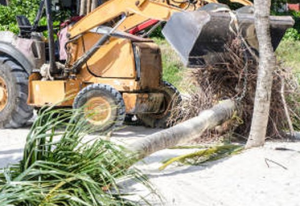
should break up the stem into smaller sections first. Once you're down to just the roots, you may use an excavator to pull them out of the ground.
Anyhow, if you aren’;t planning on planting anything in that area in the next few years, leaving them alone is fine. The nutrients used in their production will be returned to the earth upon their decomposition.
Conclusion
With most Palms, they are easily distinguished by their short roots, which grow mostly horizontally rather than
vertically into the ground. Planting a palm tree over pipes could be disastrous.
Maintaining your pipe system will stop roots from entering and causing leaks. If your water bill is very high without any evident cause, investigate the possibility of a hidden yard. After transplanting a tree, the area where new roots form returns to its pre-transplant condition.
So as to avoid damaging pipes during the transplanting process, part of the palm tree's own roots may need to be severed. The good news is that although palm tree roots can grow to incredible lengths, they are not robust enough to either crush or lift even light objects.
Mostly, whether it’s palms trees or other types of tree roots, they all can cause damage to subsurface plumbing if
allowed to grow unchecked. The best way to protect your pipes is to avoid their entry in the first place. Replace any clay or other antiquated piping with PVC or steel piping for your water and sewage systems.
Keep an eye on your tree’s growth if you’re worried about underground pipes, as the rate at which its roots expand
depends on the species of tree and the environmental circumstances under which it’s developing. Preventative
measures such as the installation of growth barriers can prevent tree roots from entering sewer lines.
And if you suspect that tree roots are the cause of your pipe leak, the first most crucial action is to call a professional plumber. Such a specialist may be able to resolve the issue without causing any harm to your lawn or landscaping by employing specialised tools and techniques.
Understand that whether it’s palms or other tree roots, they can all potentially cause seepage from faulty pipes,
cracked pipes and clogged drains. Ideally avoid planting within 3 metres of sewage drains and stormwater pipelines.
Anyhow, what this all means for you, is there’s always an answer, especially for all your palm servicing and
purchasing (and if possible your selling) needs! And that’ with ABC Palms… as such it’s suggested that it
may be best for you receiving an obligation free estimate for your mature palm tree(s) and their needs.
Because of this, ABC Palms invites you to contact us at inquiries@abcpalms.com or call on 0477 002 110
for your free no-obligation assessment and quote… whether you’re wanting to buy mature palms or
servicing them or you’re needing to remove you palm(s) quickly and efficiently.