You’ll find it’s normal to see palm trees constantly shed and re-grow their leaves in the growing season. And only the leaves that have turned completely brown or yellow should be removed from the plant. This applies for indoor and outdoor palms.
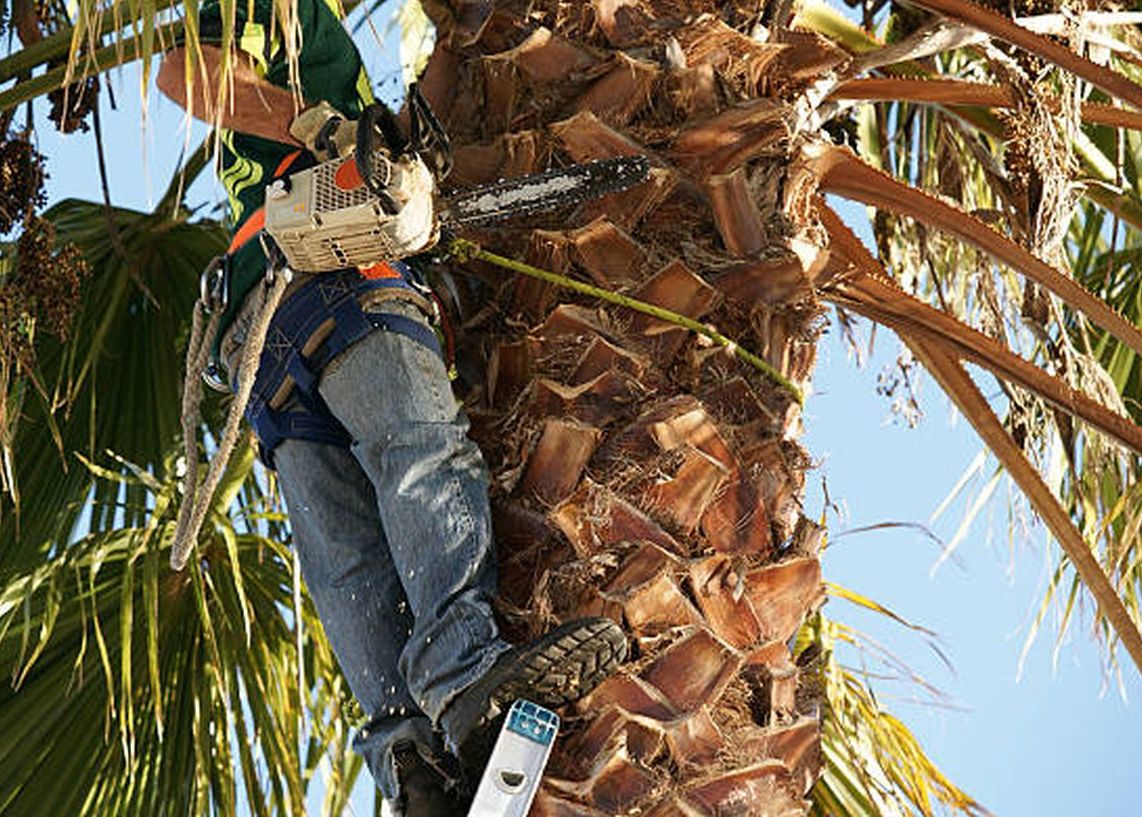
Which means it’s important to remember that pulling on the leaves can really harm the plant. And if you see that only a portion of a leaf has turned brown or yellow, you should only remove that portion. And if the browning of palm fronds is not due to natural ageing, you can remove them. And that’s a relatively simple process, yet be very careful to wear correct gear and use the correct equipment when doing so, e.g. sharpened pruning gear, etc.
To what extent can ageing be blamed for the browning?
Firstly, inspect the palm to see if it has any new green leaves. If yes, then brown palm leaves should be left alone. Depending on the palm, they will wither or fall off by themselves. If, however, no fresh fronds are sprouting and they are brown off, you should prune the browning portions of palm leaves.
Generally what’s the best cutting process?
Start with sterilizing your pruning shears (‘scissors’) or saw with alcohol before using it on the branches. You can use most type of alcohol wipes (yet not from the first aid kit!). Next wet the saw or pruning shears before attempting to remove the brown leaves to prevent harm to any of the tree’s delicate tissue. Carefully remove the brown leaves’ stems and definitely do not yank leaves off your palm, as doing so could result in a terrible looking scar on trunk and worst of all, subsequent damage to your palm.
Which also means that if you want to keep the palm tree looking and feeling healthy, you will need to regularly check for and remove any completely brown leaves. And with a palm tree, new leaves appear in the middle while the older ones on the outside become brown and die. Dead palm fronds should be removed as soon as possible since they can look ugly and also provide a fire risk if left on the tree.
Like the fronds with Alexander palms for example, the fronds of some other palm species will separate off the trunk as they die. Yet in some circumstance, they remain dormant for a long period of time.
Outdoor Palm Leaves with Brown Tips
Palm trees browning leaf tips can be caused by a number of factors and the following are just a few of the more important main ones:
- Due of a lack of water,
- Scarcity of essential minerals like magnesium and nitrogen,
- Palm is weighed down by weevils, spider bugs, aphids, or any number of other pest insects,
- Root rot from Ganoderma or other similar fungal infections, and
- Changes in palm leaf density generate a momentary yellowing of leaves.
As discussed before, the fronds of a palm tree should be pruned off if they have become completely brown. Dead, brown fronds are useless towards the palm tree and should be removed. Generally and depending on the palm type, dead palm fronds can fall off on their own accord, making room for the new ones to emerge. If a frond is completely dead, it may usually be carefully plucked from the plant with a good yank on its front, otherwise pruning is best.
Important point, partially brown fronds that seem to have a green stalk are still contributing nutrients to the palm, so, it highly recommended that you don’t remove them unless they are:
- Dangerous, as the random falling off of the dead fronds could cause injury to persons or damage to their property.
- Infected fronds can quickly spread a fungal disease to other palms in your area. As such you should dispose of those fronds asap.
- Any withering fronds should be removed asap and correctly disposed of asap as any insects or pests that have infected them could become a problem.
- Overhanging decaying fronds not only can look ugly, yet they may restrict the ‘line-of-sight’ and/or reduce the vision field along a pathway used by people or cars, etc., as such they need to be attended to for the protection of everyone using the pathway.
How to Remove Brown or Dead Leaves
Firstly, here are five of the recommended types of ‘equipment’ which you’ll most likely need before you get excited and start cutting things back:
- Cutting Blades and Shears (secateurs) for Pruning,
- Use of adjustable pressure water hoses,
- Appropriate, preferably organic bug sprays,
- Appropriate blade-cleaning liquid, and
- Gloves (not necessary if you’re brave and enjoy indoor gardening with bare hands)
Always be in the habit of disinfecting any sharp cutting tools like scissors, secateurs or utility knives and saws before and after use. So as to achieve a clean cut while removing wilted, brown leaves caused by age, low humidity, or sun damage, ideally wet the blade before use.
And here’s three more key points to keep in mind:
- To keep your palm looking well, ideally don’t remove a lot of leaves simultaneously, best to do it in stages over some time,
- Leave the plant’s stem alone and focus on the leaves.
- Using a 45-degree angle, remove any dead or undesirable branches or leaves.
Remember, palm leaves that haven’t completely turned brown can be salvaged by removing the diseased portions and letting the rest grow out and go a long way to the restoration of your plant’s beauty.
How to Care for Palm Trees with Brown Leaves
Firstly, know that yellowing leaves are a normal occurrence in the life of a palm. And that is as long as the yellowing is confined to the tree’s lower branches and the upper portions remain green, then your tree should be fine.
Secondly, you can always check the ground around the palm trunk. If the soil is dry it could explain the wilting of your palm. And if you find ‘standing water’, water pooled around the palm trunk on the soil’s surface, this may be the cause the leaves to ‘browning’. For best results check your palms reasonably regular before they dry up entirely.
Also analyse the water you give your palm as they can be harmed by soil that is deficient in minerals and water. You can either undertake a DIY deep soil test or hire an expert to do the job for you.
That’ll help you find the nutrients that are lacking in your palm’s soil. These results should help you find the right fertilizer and minerals, etc., to add them. And as a final point, an arborist advice will go a long way to the success of a good life for your palms. Remember, in most circumstances, professional attention is warranted when your palm tree looks like it’s in trouble.
Need to know more?
Give ABC Palms a call…. 0477 002 011